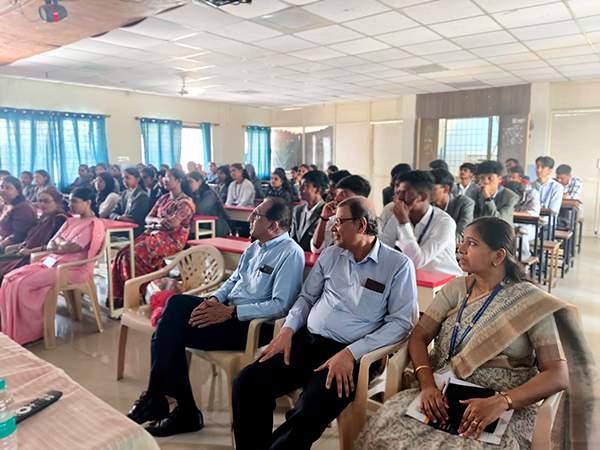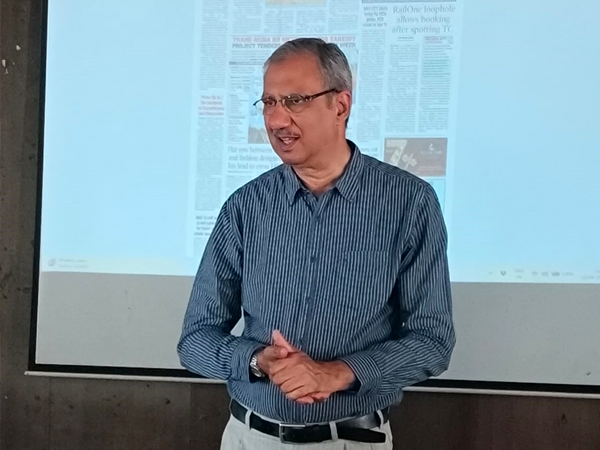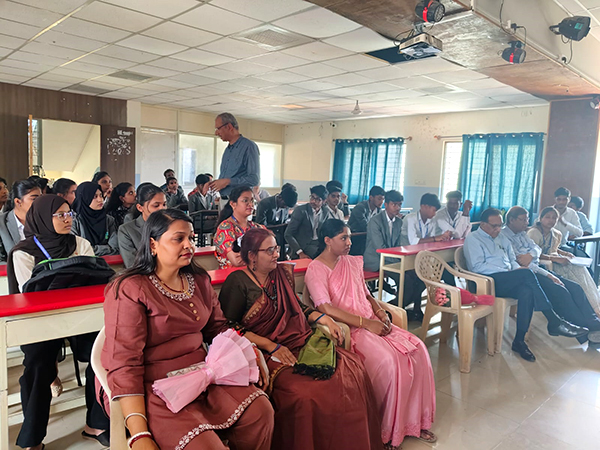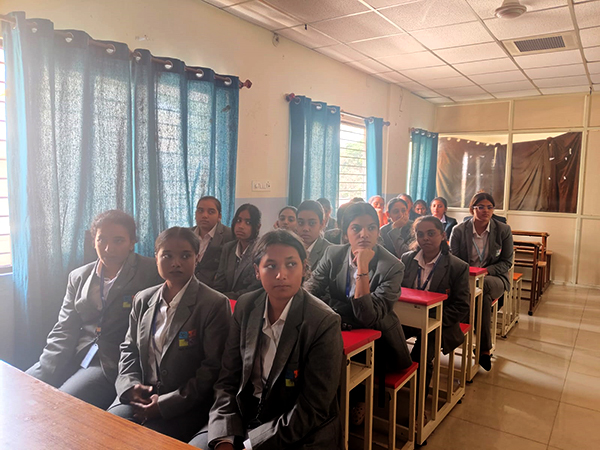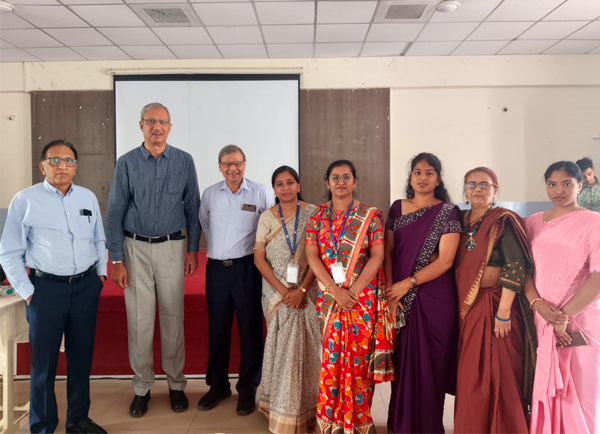
A guest lecture was organized at GRV Business Management Academy on 13th April 2026 at the GRV Auditorium for both UG and PG students. The session was delivered by Shri Shirish Koyal, a veteran journalist and journalism educator, who served as the resource person for the event on "Role of Business Journalism on Corporate World"
The lecture began with an insightful discussion on the four pillars of democracy—Legislature, Executive, Judiciary, and Media. The speaker emphasized the crucial role of media as the fourth pillar, highlighting its responsibility in ensuring transparency, accountability, and the free flow of information in society.
Shri Shirish Koyal further elaborated on the various forms of media channels, including print media, electronic media, and digital media. He explained how each medium plays a unique role in disseminating news and shaping public opinion in the modern world.The session also introduced students to different types of journalism practices, such as "shoe leather journalism" and "armchair (on-chair) journalism." Through relevant examples, the speaker illustrated how field reporting involves firsthand information gathering, while armchair journalism relies on secondary sources and desk-based research.
A significant part of the lecture focused on the "Power of 8", which are the major drivers of news selection and reporting:
Each of these factors was explained with practical examples, enabling students to understand how news is prioritized and presented effectively.
In addition, the speaker addressed the contemporary topic of Artificial Intelligence (AI), discussing whether it is a boon or a bane in the context of journalism and the student ecosystem. He highlighted that AI can serve as a powerful tool for research, data analysis, and content creation, thereby enhancing efficiency and accessibility of information. However, he also cautioned that overdependence on AI may reduce critical thinking, creativity, and originality among students. Emphasis was laid on using AI responsibly - as a support tool rather than a substitute for independent learning and analytical skills.
The lecture was highly interactive, engaging students in meaningful discussions and encouraging them to think critically about the role and responsibilities of journalists in society. The session provided valuable insights into the evolving field of journalism and its relevance in today's dynamic environment.
The program concluded successfully, leaving students with enhanced knowledge and a deeper appreciation of the importance of journalism in strengthening democracy and shaping public discourse.